Mass customization explained
Mass customization combines two worlds long thought incompatible: cost-efficient mass production and individual adaptation to customer wishes. The term merges "mass production" and "customization".
It enables individual products at scale without losing the efficiency of series production – powered by three building blocks: modular systems, flexible manufacturing and modern product configurators.
Why it matters today
Uniform products are no longer enough. Customers look for products that match their personality and situation – from configurable cars to build-your-own muesli to made-to-measure suits.
And they pay for it: willingness to pay a premium for personalized products keeps rising. In the sports-shoe segment the premium for individualized products is around 20 percent.
The four types of mass customization
- ✓Collaborative: customer and manufacturer design in dialogue – e.g. individually configured sneakers.
- ✓Adaptive: a standard product the customer adapts themselves – like a smartphone via apps and settings.
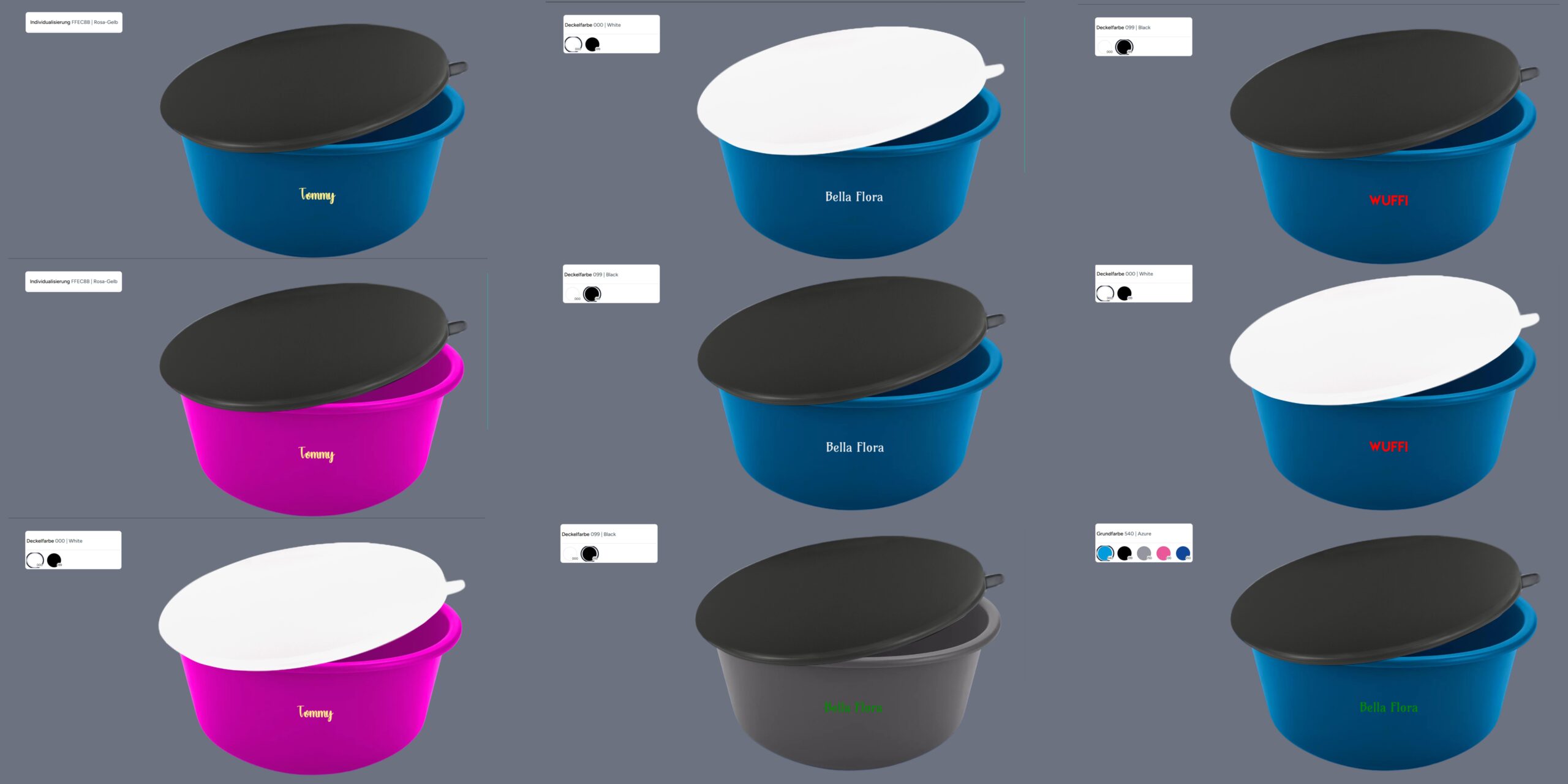
- ✓Cosmetic: the product stays the same, only the presentation is personalized – e.g. names on a bottle.
- ✓Transparent: the adaptation happens unnoticed in the background – like personalized feeds and recommendations.
Examples across industries
Mass customization now runs through nearly every industry:
- ✓Automotive: individually configurable vehicles despite efficient platform production.
- ✓Furniture: modular wardrobe systems from standardized elements.
- ✓Food: build-your-own muesli mixes.
- ✓Textiles: printed t-shirts up to made-to-measure suits.
- ✓Machinery: systems from standardized modules, tailored exactly to the customer.
The benefits for companies
- ✓Higher revenue through personalization and willingness to pay for individuality.
- ✓Fewer returns, because customers know exactly what they get.
- ✓More efficient processes without pointless variant stock – production on order.
- ✓Less consulting effort, because the configurator guides compatible options automatically.
- ✓Faster sales cycles, because customers decide upfront.
- ✓Stronger loyalty through emotional identification with "their" product.
The technical basis: the product configurator
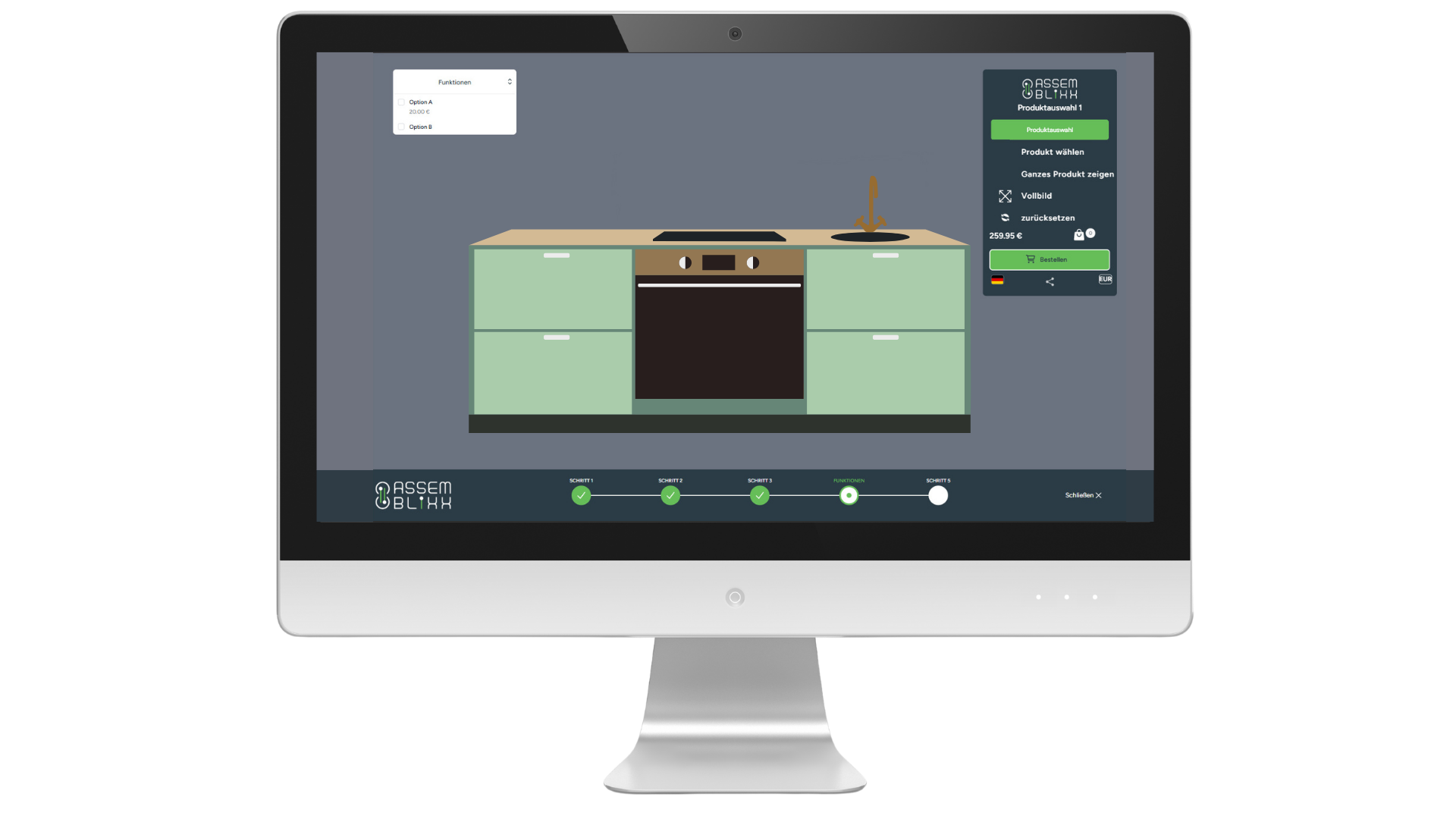
The heart of every mass-customization strategy is the product configurator. It guides customers through the selection, shows only sensible combinations, calculates prices in real time and visualizes the result – while data flows into ERP and production systems in the background.
The art lies in the balance: the configurator must master millions of combinations and still be simple enough not to overwhelm anyone.
Mass customization through set building
You don’t always have to manufacture from scratch. A particularly efficient variant is combining existing stock products into individual sets: the customer builds their personal bundle from existing components.
This drastically reduces complexity – no special production runs – while raising cart values. The principle works for gift sets, tool kits, starter packs or equipment bundles alike.
Implementing mass customization with Assemblixx
This is where Assemblixx comes in: a product configurator with native Shopify integration makes mass customization accessible to mid-sized companies too – without months-long projects or huge budgets.
Thanks to a no-code/low-code approach, marketing and sales manage variants, rules and prices themselves. Configured products land in the cart automatically and data flows straight into the ERP. Textiles, fashion, furniture or machinery – individualized mass production becomes reality.